Practitioner Review · n8n 2.35 · August 2026
n8n is worth keeping. Who hosts it is the review.
This shop runs n8n self-hosted, in containers. Sidecars execute the Python and JavaScript in Code nodes. Redis sits in the same stack. After week two — after the first image bump, the first Code node that needed an allowlist, the first webhook that had to survive a restart — we still like it. That is the verdict.
If you need a picture: n8n is IFTTT on steroids. Same trigger-and-action idea. Then a real Code node, HTTP to whatever you want, and a canvas that will run a queue without charging you per step.
n8n Cloud is the other door. Same editor. n8n owns the uptime. Use it if you do not want to run that stack. We will say when that is the right call. We will not pretend a Compose file pays us.
Two doors. Label them.
Door one: self-host, Community edition. Free on GitHub. You bring the machine. This is what we run. If you already know Docker, you can have it up in an hour or less. It is not hard. The Code-execution sidecars are the part that gets fiddly.
Door two: n8n Cloud. n8n hosts it. Official list prices on n8n.io/pricing are in euros. Converted at ECB rates on 25 August 2026 (1€ = $1.17 / £0.86): Starter is about $23 a month billed annually (20€; about £17): 2,500 workflow executions, five concurrent, one shared project, unlimited users, 2,300 AI credits, forum support. Pro is about $58 a month billed annually (50€; about £43): 10,000 executions, twenty concurrent, three shared projects, admin roles, global variables, workflow history, execution search, seven days of insights, up to 13,700 AI credits. Both Cloud plans have a fourteen-day trial and no credit card.
There is also a self-hosted Business license at about $778 a month billed annually (667€; about £571), and an Enterprise tier that is sales-quoted, hosted by n8n or by you. Neither is this review's recommendation.
An execution, on n8n's page, is one full workflow run. Steps inside it do not multiply the bill.
Who this is for
People who already work in tech and need a workflow runner that will take a Code node seriously. If you have used IFTTT or Zapier and wanted the next step — not a prettier recipe box — this is that tool.
If you want a ranked list of Zapier substitutes, or a Compose tutorial, this is the wrong page. We are not going to walk you through Redis. You are in the right place if you are deciding whether n8n hosts the thing, or you do.
What it actually does
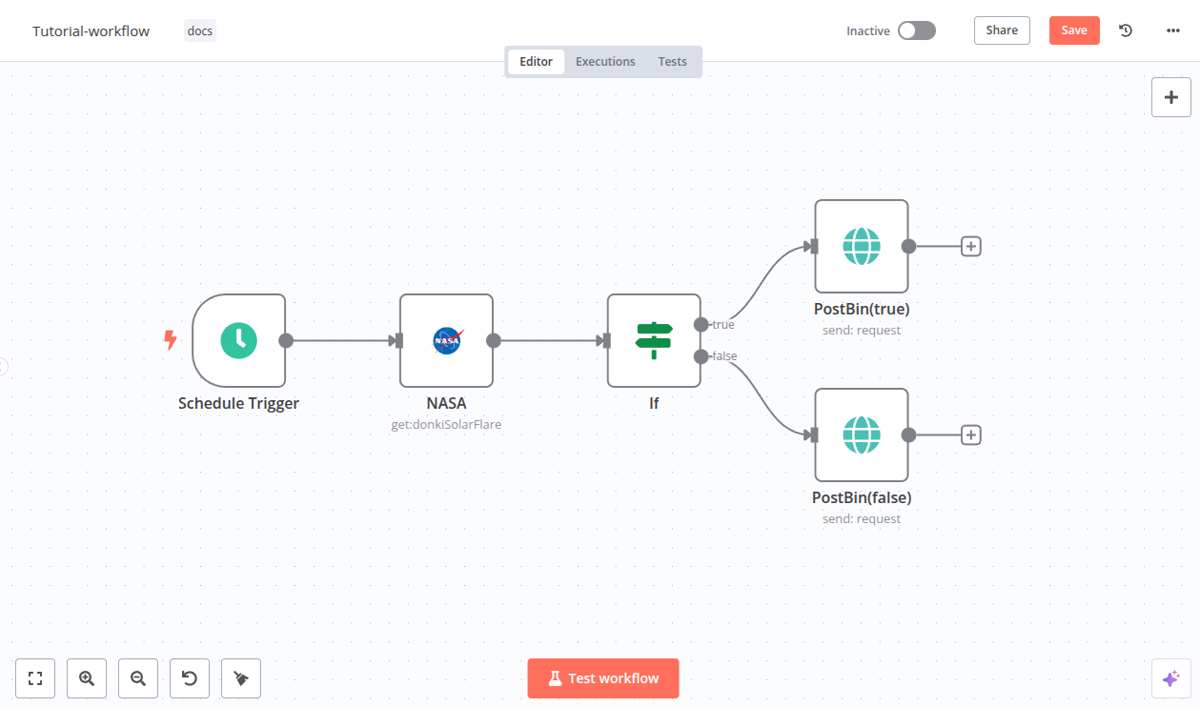
A workflow we ran: watch a MySQL database on Azure for a queue of new users. Query the rows that needed processing, call several APIs to do the work, write the changes back. Another pattern: SSH into a VM, collect logs or files, process them, and act if something is wrong. That is the product. Not a toy switchboard.
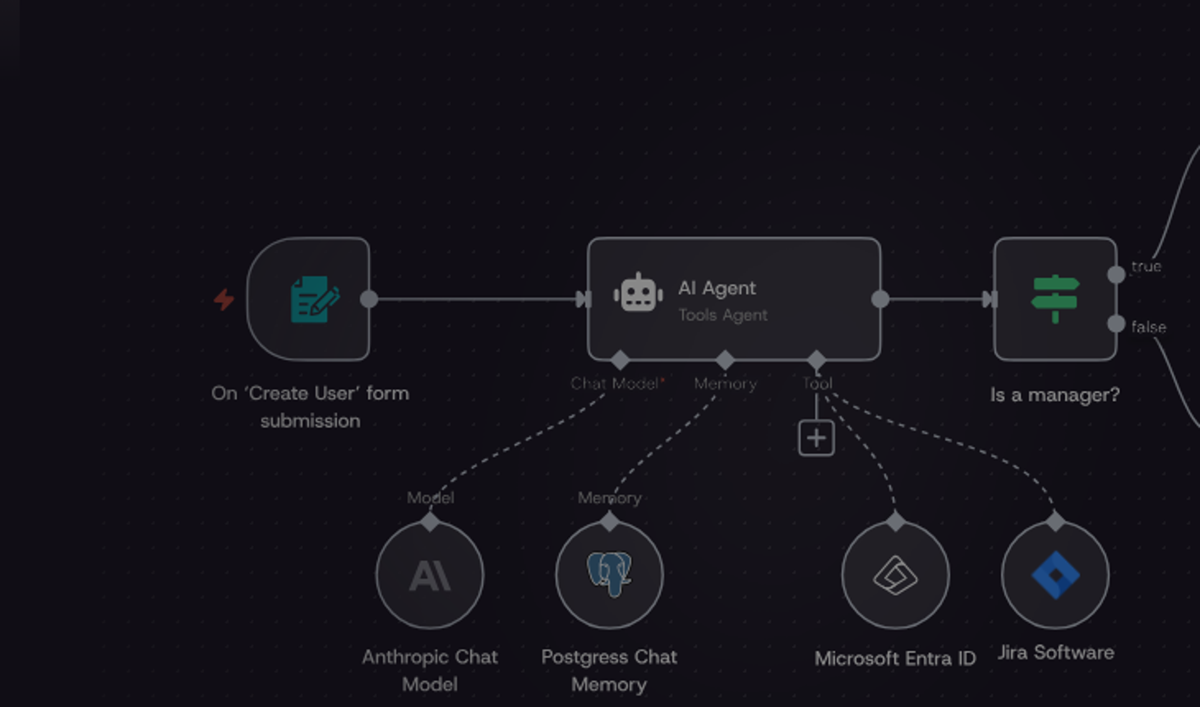
Week two on the stack we actually run
Launch day on n8n is the editor. Nodes, a canvas, a webhook that returns 200. Week two is operations.
The Community edition is almost the whole product: the editor, the nodes, Code in JavaScript and Python, webhooks, schedules, queue mode. What it is not: SSO, Git version control, environments, external secrets, log streaming, projects, workflow sharing. Register the instance with an email and you get folders, debug-in-editor, and custom execution data, still free. That is enough for a shop our size.
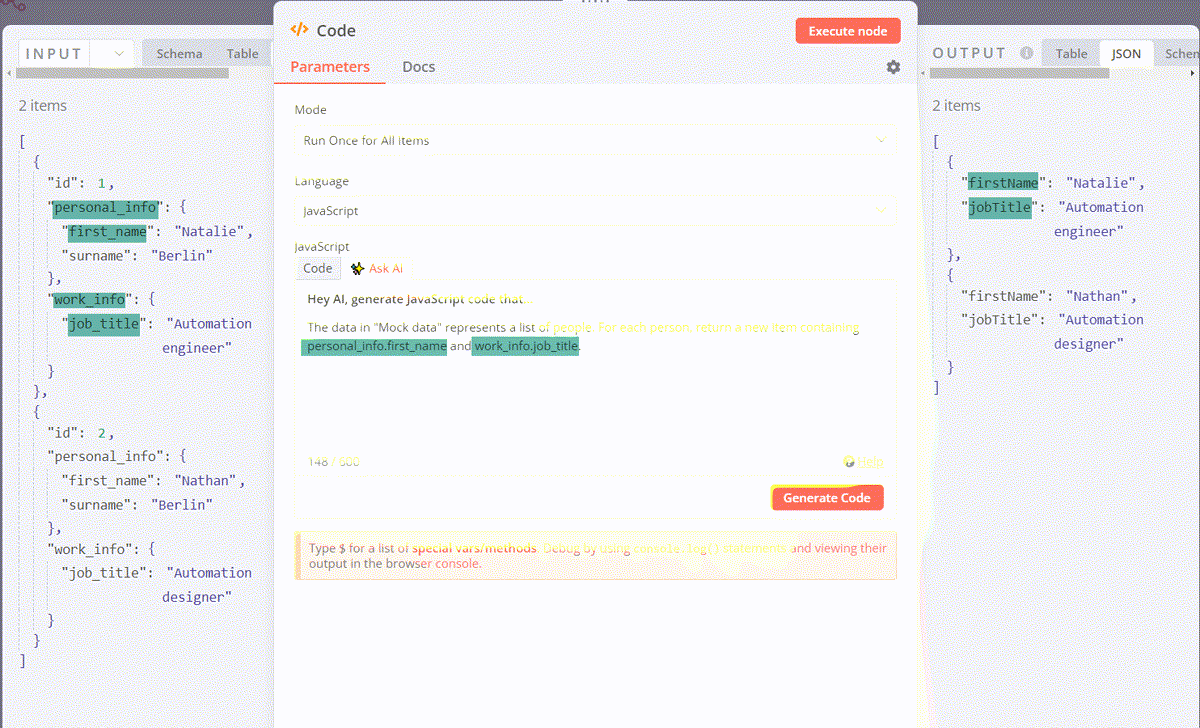
The Code node is why the sidecars exist. In n8n 2.x, user JavaScript and Python do not run inside the main process. They run in task runners. In production that means an n8nio/runners sidecar next to the n8n container, version-matched, talking to a broker on a shared token. Python starts locked down. Imports fail until you allow them. That is the job. It is also the point. You chose self-host so a Code node could use the libraries you actually use, not the ones a host decided to bless.
Redis is the other job. Queue mode puts executions on a broker so a long run does not sit on the process that serves the editor. You keep Redis healthy. You keep workers on the same database. You pin image tags so a Friday pull does not surprise you. n8n ships a new minor most weeks. GitHub's current stable tag on the day we filed this was 2.35.7; the Docker docs page still listed 2.35.6. That cadence is a feature if you like patches. It is a chore if you treat :latest as a plan.
What week two feels like, named: a webhook still firing after the box bounced. A scheduled job that did not double-run. A Code node that reshaped a payload in Python and came back without taking the editor down.
n8n's own docs say self-host is for people who can run servers, and that mistakes cost you data and uptime. They are not being humble. If that sentence makes you tired, use Cloud.
When Cloud is the right call
Cloud is the low-hanging fruit for people who do not want that stack.
Use Cloud when you want the editor this week, not a Compose file. When you do not want to own upgrades, backups, or the runner sidecars. When a few thousand executions a month is the actual load. When you can live inside their limits: no custom domain, no environment variables you set, no queue-mode knobs, no picking the database. Hosted-plan data lives in the EU, on servers in Frankfurt.
Starter is for seeing whether the product fits. Pro is the production Cloud plan this page would send a small team to. The trial, on the pricing page, gives you Pro features at Starter-sized limits: 2,500 executions, five concurrent, 320MiB of RAM. n8n's Cloud trial docs say 1,000 executions. We are quoting the pricing page and flagging the mismatch.
When self-host is the point
Self-host is the point when the stack is the product. You want the Code node on your terms: native Python, your allowlist, packages that are not on a Cloud image. You want credentials and execution data on a disk you control. You want queue mode, workers, a webhook path that is yours. You will take Community being free, including the gaps, because SSO and Git sync are not why you opened the editor. If you already speak Docker, the first hour is the install. The sidecars are the week-two work.
This shop is on that side of the line. We like n8n there.
If you later need SSO, environments, and Git on your own metal, that is the Business license or Enterprise. Ask n8n.
Caveats, named
This page does not take a cut. There is no n8n affiliate link here. Community self-host is free. Cloud is n8n's hosted door, linked to their pricing page.
Community is free. That is the honest recommendation for anyone who will run containers.
No paid ads. n8n forbids them for affiliates. We would not run them anyway.
Business is not Cloud. The $778 / 667€ / £571 tier on the pricing page is a self-hosted license. Enterprise can be either. Read the line under the price.
Prices move. n8n lists Cloud in euros. Dollar and pound figures above are ECB conversions on 25 August 2026, rounded. The pricing page offers monthly billing and a 17% save for annual; the numbers we quote are the annual rates. Month-to-month euro amounts were not on the page we could read, so they are not invented here.
The verdict, again
Keep n8n. If you will own a container stack — n8n, runner sidecars, Redis — Community self-host is the setup this shop uses and would use again. If you will not own that stack, take the Cloud door and do it on purpose.